Let me start with what the market blamed. May payrolls came in at 172,000 against a consensus near 80,000, with April revised up. The 10-year jumped to 4.54%. The Nasdaq fell 4.2% on Friday and 4.7% for the week, its first losing week in ten. That is the story everyone will tell you, and it is the story I flagged last Monday.
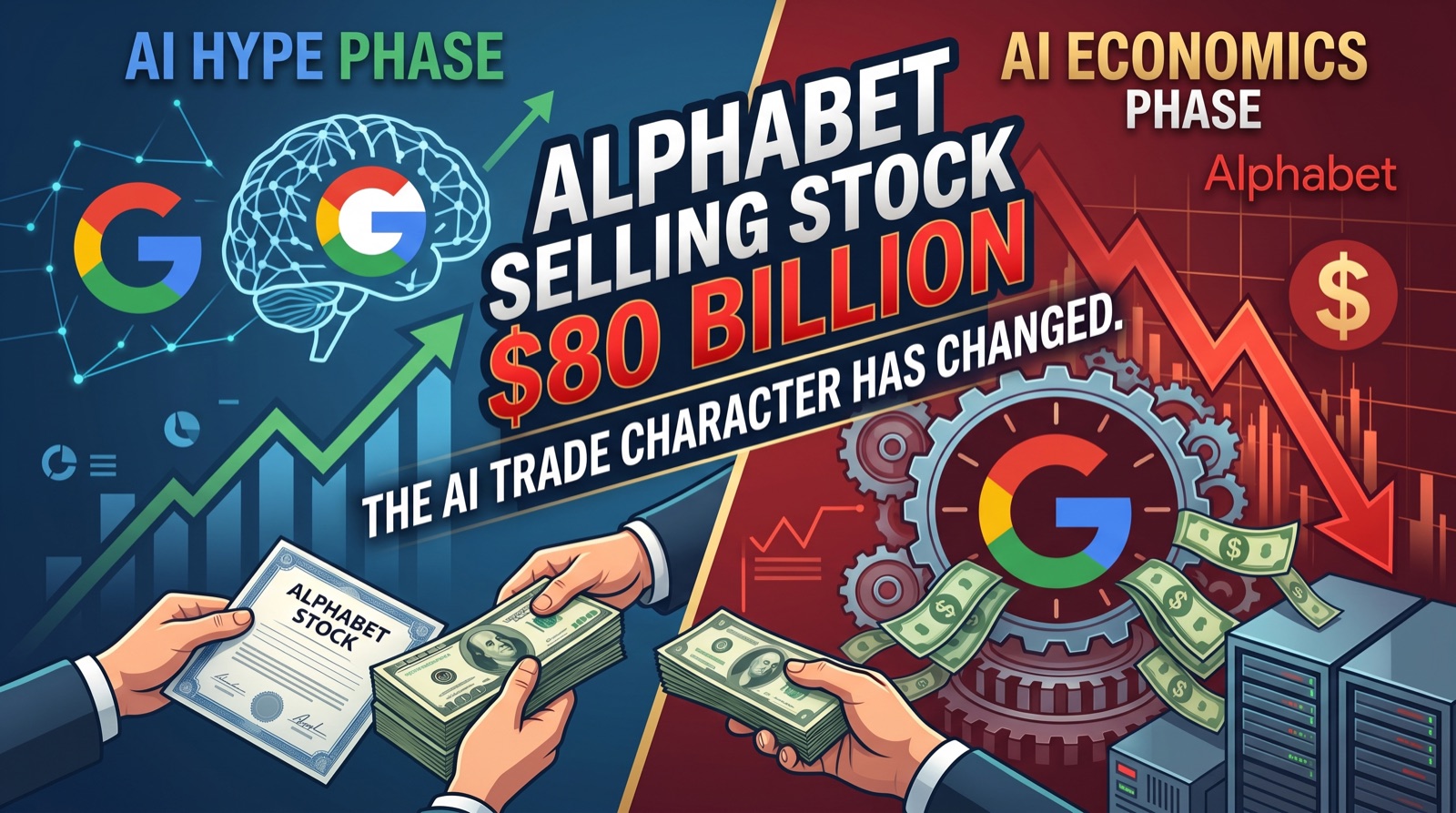
It is not the important story. The important story is that Alphabet, the most cash-generative company in the S&P 500, announced it will raise $80 billion by selling stock to fund a 2026 capital budget of $180 billion to $190 billion. Read that sentence again. The AI buildout has outgrown the free cash flow of the companies building it.
From Cash-Flow Story to Supply-of-Paper Story
For two years the bull case for the hyperscalers was simple: they generate so much cash that AI capex was free optionality. That case is now closed. Alphabet is issuing equity. Oracle, which reports Wednesday, has been burning cash and borrowing to build data centers for a customer base concentrated in a handful of AI labs. Broadcom guided AI revenue below the whisper and lost 15% in a day.
Meanwhile the supply of AI paper is about to explode. SpaceX prices its IPO this week and is reportedly raising around $75 billion, the largest offering in history. OpenAI and Anthropic have both filed confidentially. Alphabet is adding $80 billion on top. Every dollar that goes into those deals is a dollar that comes out of existing AI positions. Liquidity is finite, even in a bull market.
What I Want From Oracle and Adobe This Week
- Oracle, Wednesday. The number that matters is not revenue. It is free cash flow and how management plans to fund the gap. If Oracle announces another large capital raise alongside the print, the stock will not be forgiven for a beat. Until the funding question is answered, there is no case for owning it.
- Adobe, Thursday. Adobe is the opposite trade: a software company that is down roughly a third this year because the market decided AI eats its lunch. I want AI-first ARR growth and a raised guide. That is the kind of unloved, cash-generating name that works while everyone chases the capex builders.
- CPI, Wednesday morning. Energy prices in May guarantee a hot headline. The number I care about is core goods. If tariff pass-through stays muted, the Fed has one less reason to act next week. If core goods turn up, the hawkish dot plot I expect becomes a hawkish statement.
Where the Money Goes
This is not a case for selling AI. It is a case for changing what kind of AI to own. The winners of a supply-of-paper environment are the companies that sell a scarce physical input into the buildout and collect cash today: memory, where Micron reports in two weeks and Sandisk has been the best stock in the index; power and grid equipment; and the one hyperscaler that has not needed to raise a dollar.
Key Levels
| Nasdaq support that must hold | 25,000 |
| 10-year yield, danger zone for megacap multiples | 4.60% |
| Oracle free cash flow that would change my mind | Positive for the fiscal year |
| Adobe FY26 revenue guide, needed for a raise | > $26.5B |
| SpaceX first-day performance, sentiment tell | A close below the IPO price would be a warning |
My Take
The hyperscalers' capex is now being financed by shareholders, and the market is about to absorb the largest IPO in history plus two more AI listings behind it. That is a supply problem, and supply problems get resolved with lower prices for the marginal asset.
Playbook: underweight capex-burning AI infrastructure names, overweight memory and physical-input suppliers, and Adobe becomes interesting if Thursday's guide is raised. Expect the Nasdaq to stay volatile into the June 17 Fed meeting.