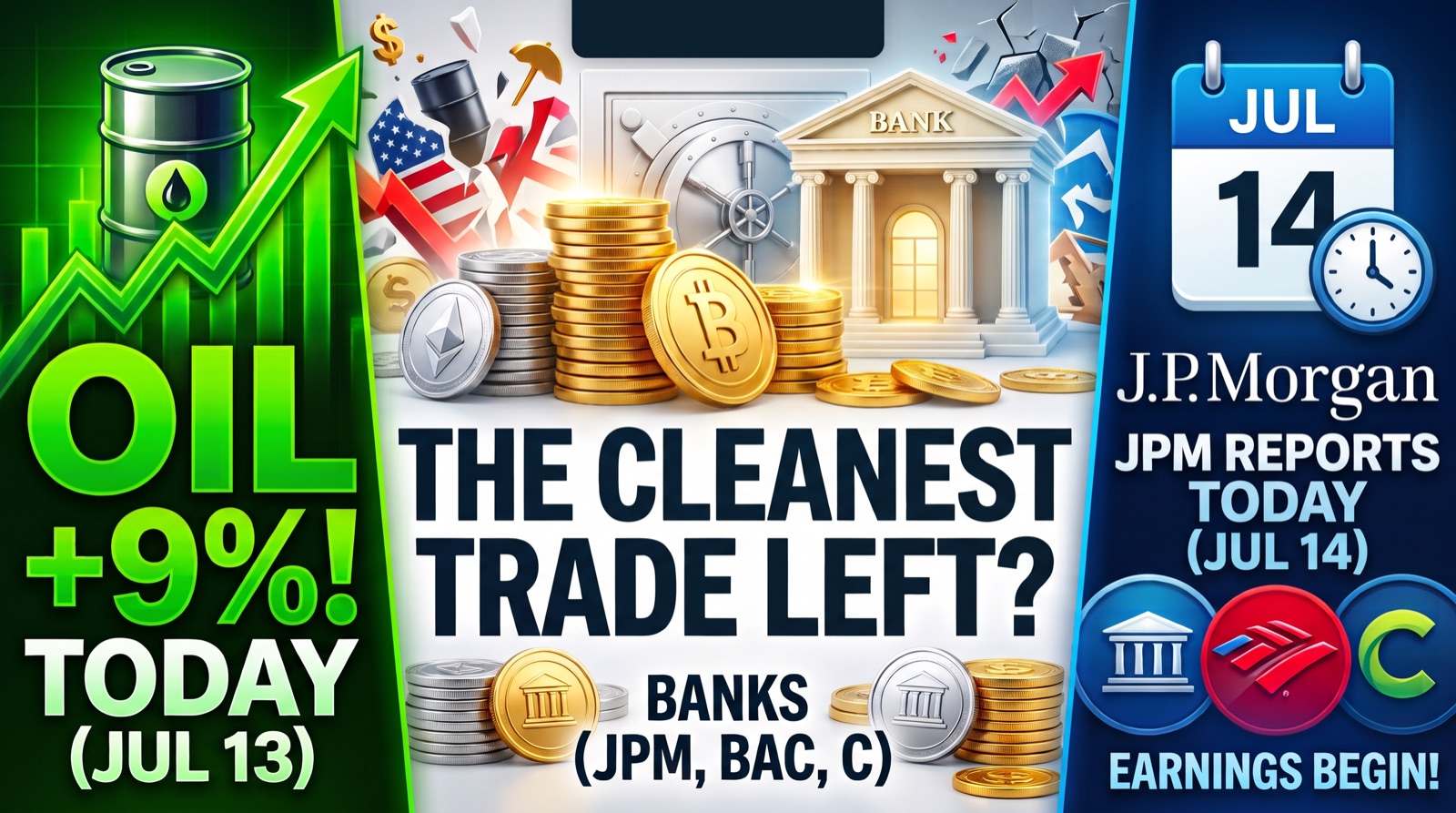
Last Monday I said the peace deal had taken the Fed off the table for July. A week later I have to qualify that. US strikes on Iran resumed Wednesday after attacks on three commercial vessels, Washington revoked the Iranian oil waiver, and this weekend both sides carried out air strikes and both claimed control of Hormuz. Brent is up 9.6% this morning to about $83. SK Hynix, which priced the largest ADR offering in history on Friday and rose 13%, is down more than 15% in Seoul overnight.
So the two forces I have written about all summer, the war premium in oil and the supply of AI paper, are both back at once. There is exactly one sector that benefits from both, and it starts reporting tomorrow.
Why the Banks Win Either Way
Trading desks make money on volatility, not direction. The second quarter had a Fed transition, a $75 billion IPO, a ceasefire, a hot CPI, and a record-long S&P winning streak followed by the worst day since October. Equities trading revenue at the big five is going to be enormous. I would not be surprised by numbers up 50% or more year over year at Goldman and Morgan Stanley, and JPMorgan's Visa stake sale adds a one-time gain on top.
Then there is the rate structure. The 10-year sits near 4.58%, the 2-year near 4.19%, and the funds rate at 3.50% to 3.75% with a Fed that has hawkish dissenters in waiting. That is the best net interest margin backdrop the banks have had in a decade, and unlike 2023 there is no deposit flight and no duration mismatch to worry about. Loan losses remain low because unemployment is 4.2%.
Most importantly, none of it depends on whether Kimi or Claude or GPT wins, whether Alphabet's capex is $180 billion or $200 billion, or whether the memory cycle peaks in 2027 or 2028. After six weeks in which every AI-adjacent beat has been sold, the place to be is earnings that the market has no framework for punishing.
Tuesday's CPI Will Look Great. Do Not Overread It.
The June CPI print lands tomorrow morning alongside the bank results. Gasoline fell hard in June as crude dropped from $106 to under $70, and that is going to produce a soft, possibly negative, monthly headline. The year-over-year rate will drop meaningfully from May's 4.2%. Core, which was 2.9%, should be flat to lower.
The market will call it disinflation. It is really just June's oil price, and June's oil price is already gone. If Brent holds above $80 into the July 29 meeting, the July CPI will give some of it back, and the three or four officials who wanted to pencil in a hike in June will still be there. The right read on tomorrow is that it buys the Fed time. It does not buy it a cut.
The Rest of the Week
- TSMC and ASML, Wednesday and Thursday. Both will report records. Given the last month, I expect both to be sold. Adding to semis on those prints is still premature; last week's condition was seeing the SK Hynix paper digested, and this morning's 15% drop in Seoul says it has not been.
- Netflix, Thursday. Priced for perfection at the tail end of a long run, and not a name to start into the print.
- Oil. The energy hedge stopped making sense on June 15 with the peace deal. It does not make sense again at $83, because the deal is not dead, only wounded, and headline risk in both directions is too high to size a position sensibly.
Key Levels
| June CPI headline, my expectation | Negative month over month; year over year below 3.8% |
| Goldman equities trading revenue, bull case | Up more than 50% year over year |
| JPMorgan reaction worth buying | Any dip on a clean beat |
| Brent, level that puts a hike back in play | Above $90 into the July 29 meeting |
| Semiconductor ETF, month-to-date | Watching for capitulation below -15% |
My Take
Between the oil whiplash and the AI unwind, the market is punishing every earnings beat that touches technology. Bank earnings are the one place this week where volatility is revenue, higher rates are margin, and there is no capex number to argue about.
Playbook: JPMorgan, Goldman, and Morgan Stanley into the prints and through the week; no new semiconductor or energy exposure until the July 29 Fed meeting is behind us.