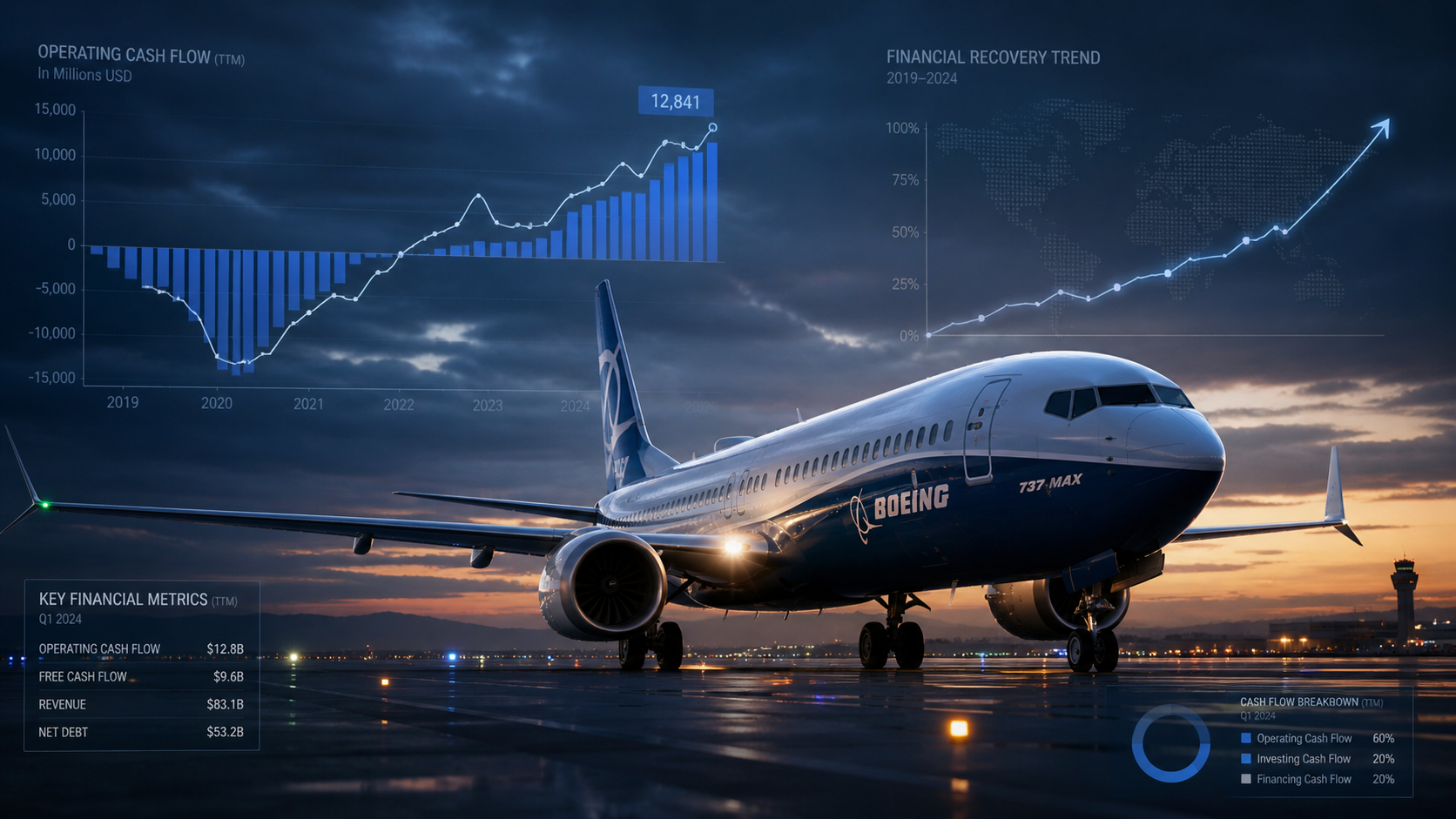
Boeing is still in repair mode. The Q2 print showed progress on revenue and deliveries. Profitability and cash flow remain the swing factors.
Q2 2025 Results
| Revenue | $22.7B |
| Commercial deliveries | 150 |
| GAAP loss per share | -$0.92 |
| Core loss per share | -$1.24 |
| Operating cash flow | $0.2B |
| Free cash flow | -$0.2B |
| Backlog | $619B (5,900+ jets) |
| 737 production rate | ~38/month |
What Changed Under the Hood
Commercial volume improved and losses narrowed versus last year. The company kept a tight grip on working capital. Defense stayed mixed, but management leaned on cost actions and schedule discipline. The tone on supply chain was firmer. The path to higher rates still runs through parts availability and factory stability.
Capex and Rate Increases
Investment focused on bottlenecks and rate increases. You want to see capex convert into sustained deliveries and lower unit cost. That is how free cash flow turns from small quarterly noise into durable annual generation.
Guidance Frame
Management pointed to methodical rate increases across programs as regulators and suppliers line up. The target is positive free cash flow for the year, with a steeper ramp in the back half. Credit agencies moved from crisis footing to "prove it." Your model should keep a discount until sustained positive free cash flow shows up.
Risks
Supply hiccups can reset rate plans. Pricing pressure and out-of-sequence work can drag on margins. Any slip in the delivery schedule pushes cash to the right. The order book helps — execution decides timing.
At the end of the day, the demand side looks solid. The balance sheet and cash engine still need proof. If Boeing strings together clean quarters with rising rates and fewer quality hits, the equity case improves fast. If execution stalls, the stock stays range-bound while investors wait for cash.