Wednesday's Fed went as I expected, only louder: a hold with three dissents in favor of a hike, the most since 2016, and a statement that named energy and the Middle East. The Dow fell 1,153 points, its worst day since April 2025, and the 10-year finished July at 4.75%. Then the earnings came.
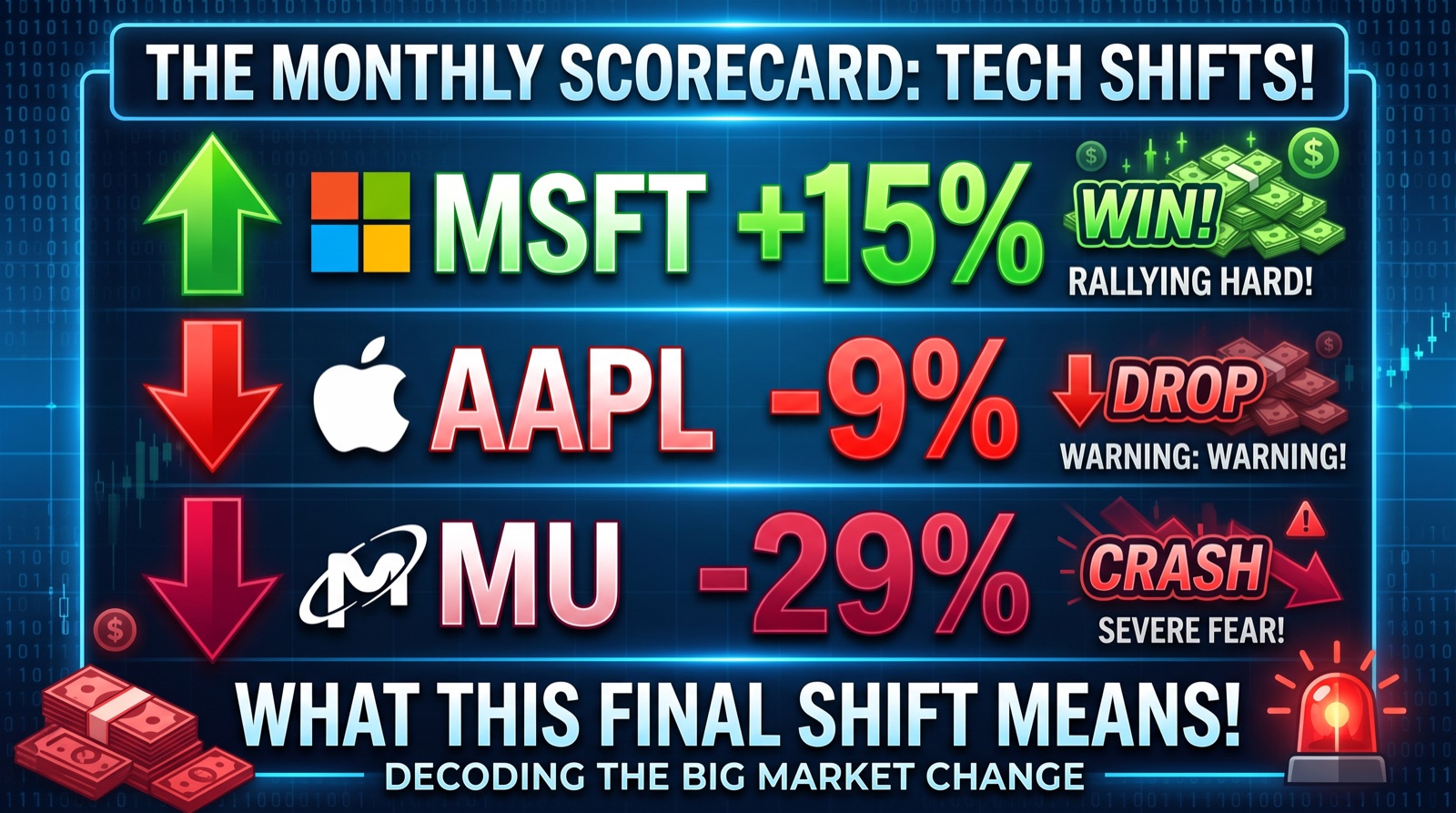
Microsoft: Azure up 43%, capex held, stock up 15.5% on Thursday, the largest single-day value gain any company has ever recorded. Amazon: AWS up 37%, stock up about 9%. Meta: earnings miss, costs up 55%, down 9%. Apple: iPhone up 22%, but guidance cut on memory costs, down 9.4% on Friday, its worst day in 16 months. Boeing turned free cash flow positive and rose 4%. PayPal beat and rose 4.5%. Robinhood beat, crypto revenue fell 38%, prediction markets carried it, and the stock slipped anyway.
Last Monday's ranking, Microsoft first, then Amazon, Boeing, PayPal, and Robinhood, with Meta and Apple to avoid, went seven for seven. I say that not to take a lap but because what comes next depends on being honest about why it worked. It worked because the market applied one rule, consistently, for a month. Rules that consistent get fully priced. That is where we are this morning.
The Rule Is Now Priced. Time to Look at What It Broke.
Micron fell 28.7% in July. Sandisk fell 56% from its June 25 high to its July 29 low. Intel lost 35% in a month. The semiconductor index shed more than $2 trillion of value. All of that happened while the customers of these companies, in their own earnings calls, raised or held capex plans totaling more than half a trillion dollars for this year alone, Samsung said the chip crunch will last until 2028, and Apple told you its guidance is constrained by the price of memory.
Read that last point again, because it is the whole thesis. The largest buyer of memory in the world just cut its guidance because memory is too expensive and too scarce. That is not what the bottom of a memory cycle looks like. It is what the middle of one looks like. Micron in the $800s, down almost a third in a month, with an August-quarter guide of $50 billion, is the most mispriced large-cap in the market this morning.
Nvidia is the second name. Its customers just told you, one after another, that they are spending more, not less. It reports on August 26 and I will publish my updated model before then. The last time I ran the numbers I called it a sell at $215. It is $195 now with earnings roughly double what they were. The multiple did the work the price was supposed to do.
This Week
- Palantir, tonight. Down about 30% this year on valuation, with US commercial growth that has been absurd. The bar is a raised full-year guide. It is the read-through for whether software that sells AI outcomes, rather than AI capacity, gets treated differently from the hyperscalers. My guess is it does.
- AMD, Tuesday. Data-center revenue should roughly double. After a month in which every chip beat was sold, I expect this one to be sold too unless the guide is spectacular. Adding before the print is the wrong sequence. A drop on a strong number is the entry.
- Novo Nordisk, Tuesday. The ziltivekimab failure on Friday erased $30 billion. I wrote in January that Wall Street was wrong to sell this name. The pipeline setback is real; the Wegovy pill's launch, with more than five million prescriptions, is also real. Pill sales and 2026 guidance on Tuesday decide whether January's thesis survives.
- July jobs, Friday. After the Fed's hawkish hold, a weak print is the best possible outcome for equities and the memory trade, because it takes the September hike off the table. June's 57,000 was already soft. My base case is another sub-100,000 number.
Key Levels
| Micron, buying zone | $850 to $900 |
| Nvidia, buying zone | $190 to $200 |
| AMD data-center revenue, bull case | Above $6.5B |
| July payrolls, level that ends hike talk | Below 50,000 |
| 10-year yield, ceiling for a chip rebound | Under 4.75% |
My Take
The market spent July sorting the AI trade by capex discipline, and it sorted correctly. What it got wrong is the suppliers: it sold memory and GPUs while their customers were raising orders and Apple was cutting guidance because it cannot get enough of them.
Playbook: Micron and Nvidia this week, stay with Microsoft and Amazon, wait on AMD until after the print, reassess Novo after Tuesday.