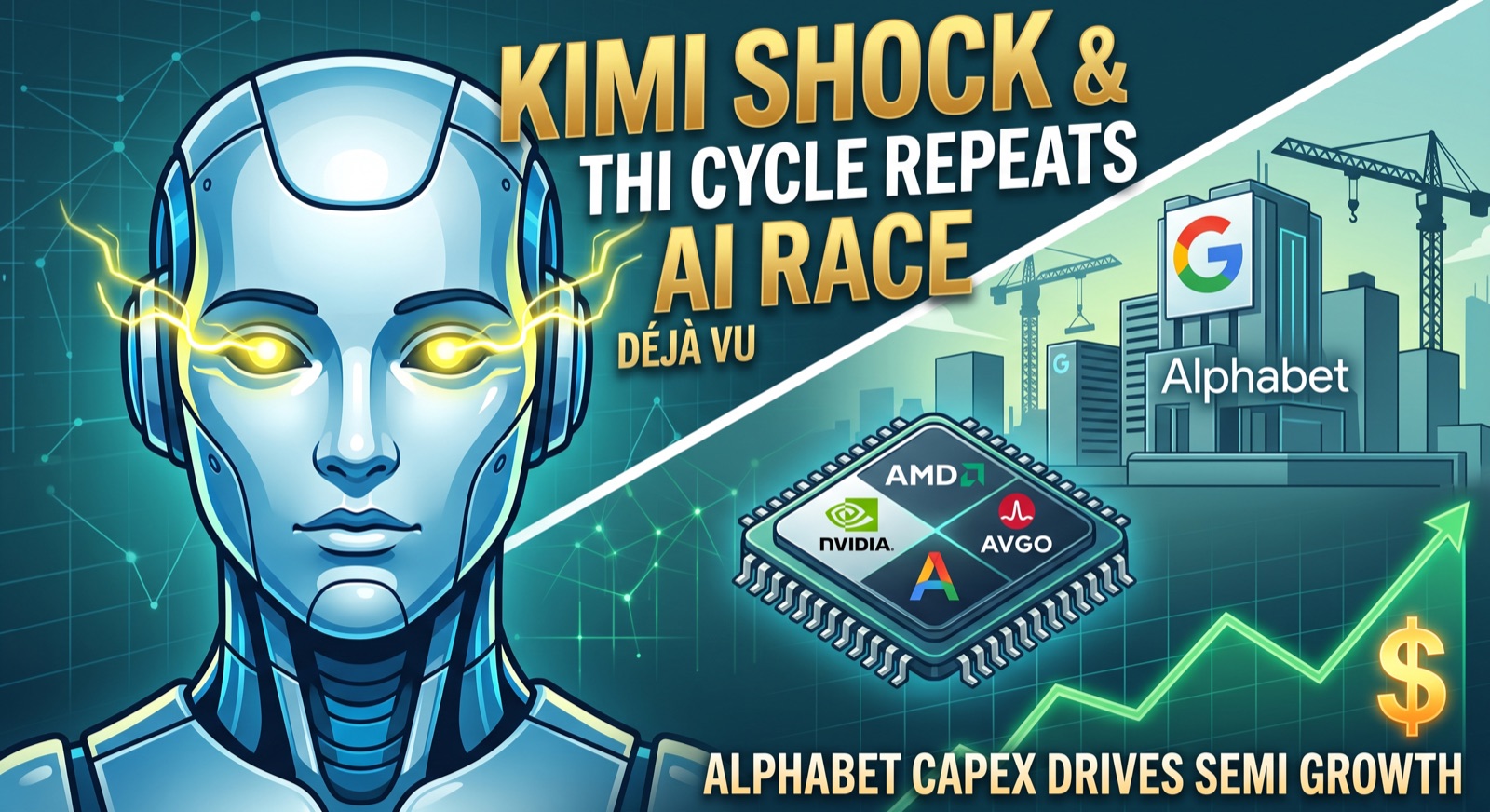
Moonshot's Kimi K3, an open-weights model, posted benchmark results last week within range of OpenAI's and Anthropic's frontier systems. On Friday alone Applied Materials, Lam, KLA, Arm, and Intel each fell about 4%, and Micron and Nvidia more than 2%. Add CXMT's planned $8.6 billion Shanghai IPO, which hit the memory names on Thursday, and the semiconductor ETF is now down more than 17% in July. Nvidia is testing $200. Apple briefly passed it as the most valuable company on Friday.
Meanwhile TSMC reported a record quarter with revenue up 36%, ASML beat and raised, and both stocks fell. Two weeks ago I said semis were not worth adding until the SK Hynix paper was digested. It has been. The trade is now oversold on a thesis I think is wrong, and this is the week the biggest buyers of compute on earth tell us how much they are spending. The time to act is before they do.
Why Cheaper Models Mean More Chips, Not Fewer
January 2025, DeepSeek. Nvidia lost $600 billion of market value in a day on the argument that efficient Chinese models meant the West had overbuilt. Eighteen months later, capex at the four largest hyperscalers is running at more than double the 2024 rate and Alphabet sold $85 billion of stock to fund its share. The efficiency gain did not reduce demand for compute. It reduced the price of intelligence, and demand for intelligence turned out to be almost perfectly elastic.
That is the Jevons argument and it is not a slogan, it is the observed behavior of every customer of these companies. When inference gets cheaper, product teams put a model in every workflow, and the number of tokens served goes up faster than the cost per token goes down. Meta wants to sell its excess capacity precisely because it expects that. Kimi K3 makes inference cheaper. It does not make it free, and it runs on Nvidia hardware. There are also serious questions about how Moonshot got that hardware, which is a political problem for Moonshot, not a demand problem for Nvidia.
The Three Prints That Decide It
- Alphabet, Wednesday. The number is capex. Guidance was $180 billion to $190 billion for 2026. Alphabet just raised $85 billion of equity; companies do not do that to spend less. If the range moves up, the semiconductor bear case dies with it, even if the stock is sold on the day for the same reason. Watch Cloud growth, which has been accelerating on AI workloads and is the revenue side of the capex argument.
- Tesla, Wednesday. Second-quarter deliveries were 480,000, up 25% and the first annual growth in two years. The market did not care because it wants margins. I expect a large revenue beat and a thin margin, with capex guidance above $25 billion. That is a capital-intensive AI story with worse economics than the hyperscalers, and the suppliers look better than the customer.
- Intel, Thursday. Down 35% this month on 18A yield chatter and having lost the data-center revenue lead to AMD. Any evidence that 18A yields are improving and external foundry customers are real would trigger a violent short squeeze. That squeeze is the only reason to hold it, and it comes with no illusions about the foundry losses.
What Looks Cheap
Nvidia at $200, which is below where I rated it a sell last October, with earnings that have roughly doubled since. I will publish an updated model before its August print. Micron below $900, the level I named on July 6. And the equipment makers, Applied Materials and Lam, which were sold on Friday for a reason that has nothing to do with the number of fabs under construction.
Sandisk is the exception. It is down more than 50% from its June high and that is still an enormous gain for the year, in a name where CXMT's IPO is a real signal about NAND supply from China. The DRAM and HBM story is stronger than the NAND story right now, and the stronger story is the one to own.
Key Levels
| Alphabet 2026 capex guide, semiconductor bull confirmation | Raised above $190B |
| Nvidia, buy zone | $195 to $205 |
| Micron, buy zone | Below $900 |
| Semiconductor ETF, month-to-date low that should hold | -20% |
| Intel, squeeze trigger | 18A yields reported above 80% |
My Take
The Kimi sell-off repeats the DeepSeek mistake: it treats cheaper intelligence as less demand for compute, when everything since January 2025 says the opposite. This week's capex guidance from Alphabet and Tesla is the evidence, and I expect it to point up.
Playbook: Nvidia around $200, Micron under $900, Applied Materials and Lam on Friday's sell-off, a small Intel squeeze bet into Thursday. Not Sandisk.