Last week was a bond-market week. A weak 20-year auction on Wednesday sent the 30-year yield above 5.3%, its highest since 2007, and the S&P fell 1.4% for its first losing week in four. Treasury responded by doubling its long-end buybacks, and the liquidity signal sent Bitcoin up 22%, its best week in two years, through the $70,000 level that confirms the flows have turned. Gold hit $4,634. Walmart fell 9% on soft comps; Target rose 4% on strong ones. Both went the way I expected.
Also last week: Nvidia agreed to backstop up to $105 billion of financing for OpenAI's Ohio campus and to become its sole compute supplier, Anthropic disclosed a revenue run-rate above $65 billion ahead of its IPO, and the Commerce Secretary publicly pressured Apple not to buy Chinese memory, sending Micron above $1,000. Over the weekend Alibaba priced a $10 billion share placement to fund AI. The supply-of-paper story I first wrote about on June 8 has now reached China.
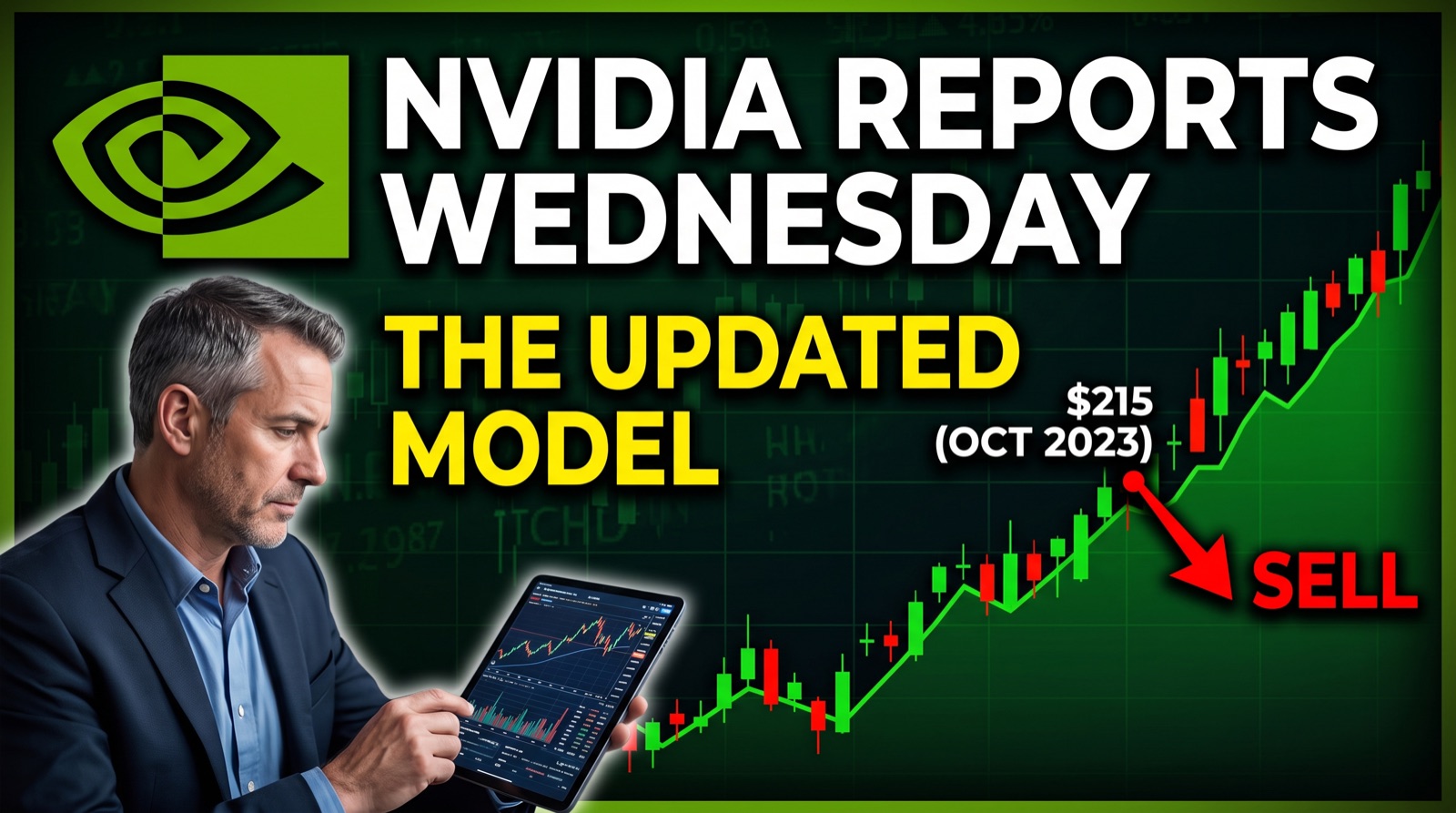
Nvidia reports Wednesday after the close. On October 2 last year I changed my rating to sell at $215.50 with a DCF value of $201. The stock is just above $200 this morning. I re-ran the model. Here is what changed.
What Changed in the Model
Key Assumptions, October 2025 vs Today
| Share price | $215.50 then, about $205 now |
| Trailing twelve-month revenue | Roughly doubled |
| 5-year revenue CAGR | 22.5% then, 30% now |
| WACC | 13.52% then, 12.75% now (beta has come down as the stock consolidated) |
| Terminal growth | 3.0%, unchanged |
| FY2030 revenue projection | ~$358B then, ~$520B now |
| Implied share price (DCF) | $201 then, $268 now |
| Implied price, exit EV/EBITDA at 18x | $183 then, $241 now |
The revenue line is the whole story. In October I projected $358 billion of revenue for fiscal 2030 and thought I was being generous. Nvidia's customers have since guided to more than half a trillion dollars of 2026 capex between them, Alphabet and Alibaba have sold stock to pay for it, and Nvidia itself is now financing its largest customer's buildout. A supplier that has to backstop its customers' debt is a supplier with pricing power and a demand backlog, not one facing a cyclical peak. I also cut the discount rate modestly, because ten months of sideways trading has taken the beta down.
Both valuation methods now sit well above the market price. The DCF gives about 30% upside, the conservative multiple about 17%. That is enough to move the rating from sell to buy, which is where the July 20 and August 3 posts already pointed. This is the model catching up to the argument.
What I Need to See Wednesday
- Data-center revenue above $85 billion. Consensus is a beat; the question is by how much. The hyperscaler capex numbers from July imply the supply chain is still the constraint, not demand.
- A guide that assumes zero China. Export policy is a mess, with remote-access loopholes and the Moonshot episode. I want a guide that does not depend on it, so the China outcome can only be upside.
- Gross margin holding near 75%. Memory costs are the risk to every hardware company's margin right now, Apple included. Nvidia passes them through; I want to see that it still can.
- A fiscal 2028 comment. Any framework for next year's growth would be new. If management describes 2028 as supply-constrained, my 30% CAGR is conservative.
The risk is the same one that has governed every chip print since June: a great quarter sold anyway. Marvell reports Thursday and Salesforce Wednesday, and both are read-throughs. The right response is to hold through the print regardless. The model says the stock is cheap on numbers that are likely to go up, and I am not going to trade around a two-year thesis for a one-day reaction.
Friday: Warsh at Jackson Hole
Chair Warsh speaks Friday morning, the same morning the July PCE report lands. Core PCE was 3.3% in June and the six-month trend is worse. The jobs data has been weak, but the bond market just told the Fed it does not believe inflation is under control, and a new Chair who spent his career criticizing easy money is not going to argue with the bond market at his first Jackson Hole. I expect him to keep September fully live, and I would not be surprised if hike odds rise on the speech.
That is fine for chips. It is not fine for the long-duration megacaps that have led since Microsoft's print, which is why trimming them was the right call last week. A hawkish Warsh is bad for the Nasdaq and irrelevant for a company whose customers are supply-constrained.
My Take
Ten months of a flat share price against doubled earnings, plus customers who are borrowing, issuing stock, and accepting supplier financing to buy more, have inverted the valuation argument. My updated DCF puts Nvidia at $268 against a price near $205.
Rating: upgraded from SELL to BUY, worth holding through Wednesday's print. Expect a hawkish Warsh on Friday, which argues for being underweight long-duration megacaps rather than chips.