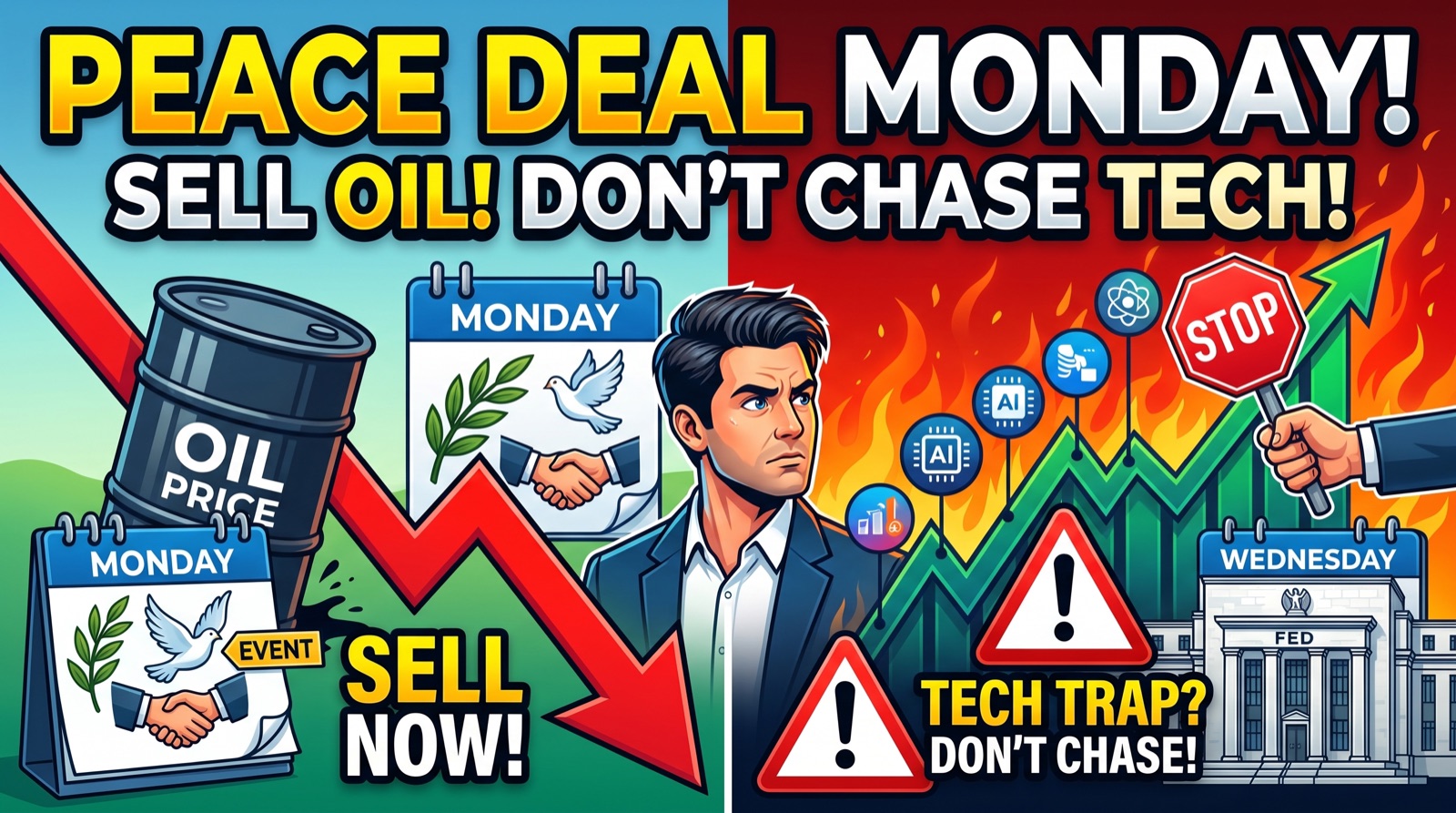
Last night the White House announced a deal ending the fifteen-week conflict with Iran: a toll-free reopening of the Strait of Hormuz, a lifting of the naval blockade, and a formal signing set for Friday in Switzerland. Brent is down around 5% this morning and equity futures are sharply higher. Boeing, the airlines, and anything with a fuel bill are leading.
Last week already delivered the whiplash. A hot May CPI at 4.2% and a threat of new strikes took the Dow down 950 points on Wednesday; Trump calling the strikes off took it up 930 points on Thursday. SpaceX priced at $135, raised $75 billion, and closed its first day at $160.95. The ECB hiked for the first time in three years. None of that was calm, and today's rally is not the end of it.
The Energy Trade Is Over, and That Is Fine
Energy has been the obvious hedge since March against exactly the war premium that is now being removed. Today is the day that hedge stops earning its keep. If Hormuz genuinely reopens, the physical shortage that carried Brent above $100 for a quarter ends, inventories rebuild, and the marginal barrel gets priced by demand again. I think Brent trades into the $70s within weeks, not months, and nobody wants to be the last one out of a crowded trade that has already been cut in half from its highs.
The beneficiaries are obvious: airlines, Boeing, which gets both cheaper fuel for its customers and a reopened Gulf delivery pipeline, and consumer names whose input costs just fell. Cheaper oil is a tax cut for the American consumer at exactly the moment retail sales, out tomorrow, are expected to show it is already spending.
Why This Does Not Fix Wednesday
Here is where I part ways with this morning's rally. Lower oil in June lowers July's CPI. It does nothing about the numbers the Fed will sit down with on Tuesday: headline inflation at a three-year high, core at 2.9% and not falling, payrolls running well above trend, and retail sales likely strong. Kevin Warsh's first Summary of Economic Projections has to reflect that data, not this morning's futures.
My base case has not changed since June 1. The Fed holds at 3.50% to 3.75%, the 2026 median dot moves up, and a meaningful bloc of the committee pencils in a hike. What I would add now is that Warsh will be careful not to let a peace-deal rally read as a policy easing. If anything, calmer markets give him more room to sound hawkish, not less.
What I Expect Wednesday
| Funds rate | Hold at 3.50% to 3.75% |
| 2026 median dot | Up from 3.4%, toward 3.75% or higher |
| Officials projecting a 2026 hike | At least a third of the committee |
| Core PCE projection | Raised meaningfully above 2.7% |
| Market reaction to a hawkish dot plot | Long-duration tech down, 2-year yield up |
The Playbook Into the Holiday Week
Markets are closed Friday for Juneteenth, so this is a four-day week with a Fed meeting in the middle. The play is to sell energy into strength today, keep the Boeing and airline exposure that the reopening favors, and refuse to chase the Nasdaq higher before Wednesday. If Warsh is as hawkish as I expect, the megacaps that led this morning's bounce give it back by Thursday, and that is the better entry. Accenture reports Thursday, and I will be watching its bookings as a read on whether enterprises are actually paying for AI services or just talking about them.
My Take
The peace deal is a genuine turning point for oil and a relief for consumers and airlines. It is not a turning point for the Fed, which meets with inflation at a three-year high and a labor market that is not cooperating. Today's rally and Wednesday's dot plot are on a collision course.
Playbook: exit the energy hedge, keep Boeing and airlines, stay underweight long-duration tech into the Fed, and look to buy quality megacaps into a hawkish reaction on Wednesday or Thursday.